Hey everyone, it’s Maggi here. It’s been a few years since I last put pen to paper (or fingers to keyboard) for a blog post, but I’m excited to dive back in. As someone who’s passionate about coaching others toward better health—and honestly, recommitting to my own wellness journey—I’ve been inspired by the latest updates in nutritional science. The U.S. Department of Health and Human Services and the USDA released the Dietary Guidelines for Americans for 2025-2030 on January 7, 2026, and they’re a game-changer. They emphasize eating “real food” over processed stuff, putting whole, nutrient-dense options at the forefront. If you’re like me and looking to refresh your habits, this is a perfect starting point. Let’s break it down, including the new food pyramid, and I’ll share some practical tips to make it actionable for everyday life.
Why These Guidelines Matter NOW
In a world where chronic diseases like diabetes, heart issues, and obesity are rampant (affecting over 90% of older adults and a shocking 60% of younger ones), diet plays a massive role. These new guidelines mark a “historic reset” in U.S. nutrition policy, shifting away from pharmaceuticals and back to food as the foundation of health. They’re shorter, more user-friendly, and designed for real people—not just experts. Key themes include prioritizing high-quality proteins, healthy fats, fruits, veggies, and whole grains while ditching highly processed foods and refined carbs. This aligns perfectly with coaching principles: sustainable changes over quick fixes.
The guidelines build on past versions but introduce bolder shifts, like the first-ever explicit limits on processed foods. They keep classics like capping saturated fat at less than 10% of calories and watching sodium intake, but the focus is on balance and enjoyment. Calories? Tailor them to your age, sex, activity level, and goals—no one-size-fits-all here.
It’s worth noting a bit of history here: Much of the grain-centric emphasis in earlier U.S. dietary advice can trace roots back to the 19th-century influence of the Seventh-day Adventist Church. Church co-founder Ellen G. White promoted a vegetarian, plant- and grain-based diet through visions emphasizing health reform for spiritual and physical purity—avoiding meat and stimulants to curb “baser passions.” John Harvey Kellogg, a prominent Adventist, ran the church-affiliated Battle Creek Sanitarium, where he developed bland, grain-focused foods like corn flakes as alternatives to meat-heavy meals. While they didn’t directly author the official guidelines (which started in 1980), their ideas—spread through sanitariums, the founding of the American Dietetic Association by Kellogg’s protégé in 1917, and advocacy for cereal- and plant-heavy eating—helped shape nutrition discourse and early public recommendations favoring grains over animal proteins. The new 2025-2030 guidelines represent a clear departure from that legacy, prioritizing nutrient-dense proteins and whole foods instead.
The New Food Pyramid: A Visual Guide to Better Eating
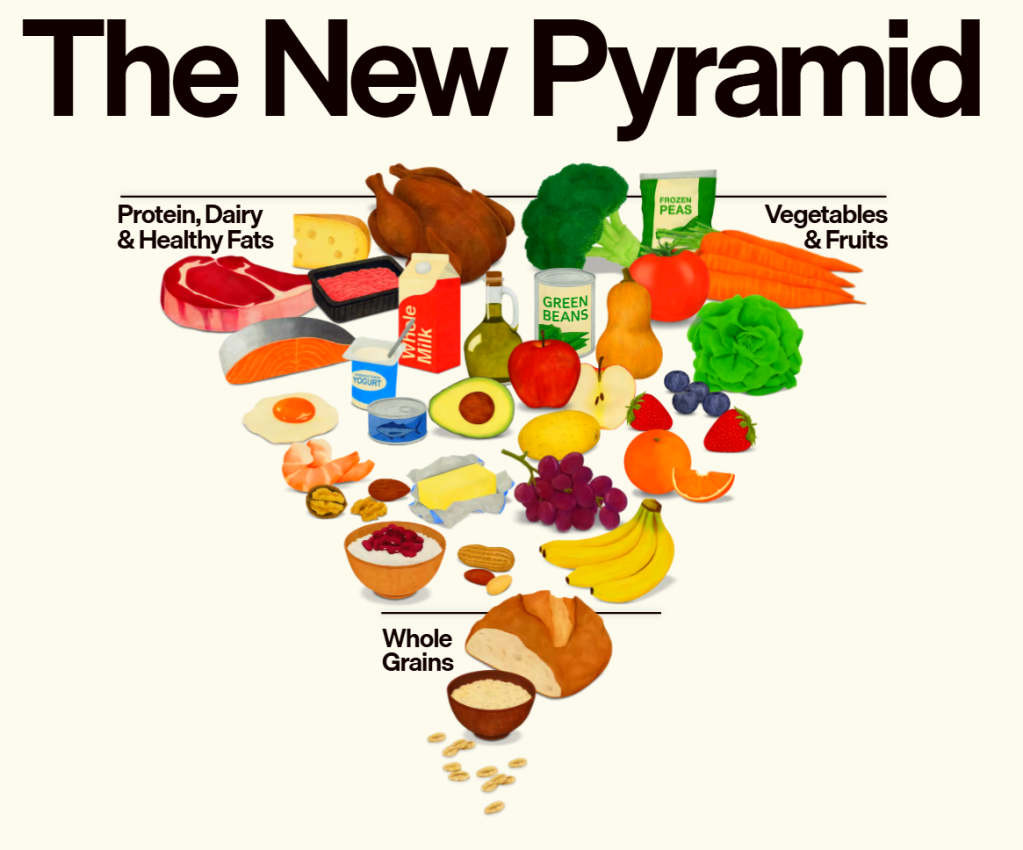
Remember the old food pyramid from school? It’s back, but revamped—and flipped on its head for 2025-2030! This inverted triangular graphic puts the emphasis on minimally processed, nutrient-rich foods as the largest sections at the top, tapering down to smaller portions at the base. It prioritizes protein as a key focus, alongside dairy, healthy fats, vegetables, and fruits in the broadest area, with whole grains taking a smaller spot at the bottom. Red meat is included in moderation (but skip processed varieties), and there’s a nod to plant-based options too.
Here’s a quick breakdown of the pyramid’s layers:
- Top (Largest Portions): Split into two main sections—Protein, Dairy, & Healthy Fats (e.g., lean meats, poultry, eggs, fish, beans, nuts, soy, milk, yogurt, cheese, avocados, olive oil) and Vegetables & Fruits (aim for a rainbow of colors for vitamins and fiber).
- Bottom (Smallest Portion): Whole Grains (e.g., quinoa, oats, brown rice)—emphasizing quality over quantity.
This design promotes abundance in nutrient-dense foods rather than restriction, making it easier to build meals that fuel your body. The guidelines indeed highlight protein as a predominant focus, recommending it at every meal for satiety and muscle health. For a visual, check out this representation of the updated pyramid:
Practical Tips for Implementing the Guidelines
As I gear up to coach again, I’m applying these to my own routine. Start small—maybe swap processed snacks for fresh produce or a protein-rich option. Here’s how to make it work:
- Build Your Plate: Prioritize protein as the centerpiece (a quarter to a third of the plate), fill half with vegetables and fruits, and add a smaller portion of whole grains. Include dairy or alternatives and healthy fats like a drizzle of olive oil.
- Protein Power-Up: The guidelines boost emphasis on proteins—aim for 25-30g per meal, or 1.2-1.6g per kg of body weight daily. Try grilled chicken with veggies or a lentil salad for variety.
- Cut the Processed Stuff: Read labels; if it has a long ingredient list, skip it. Focus on whole foods 80% of the time.
- Personalize It: If you’re active, up your calories with nutrient-rich add-ons. For weight management, track portions mindfully.
- Enjoy the Process: Eating should be social and fun—share meals with friends or family to make it sustainable.

Wrapping Up: Your Health Journey Starts Today
Getting back into writing this post has reignited my spark for health coaching. These 2025-2030 guidelines aren’t about perfection; they’re a roadmap to feeling energized and preventing disease through real, delicious food. If you’re ready to recommit like I am, start with one change this week—maybe sketching your own pyramid meal plan.
What do you think? Share your thoughts in the comments, or if you’re interested in coaching sessions, drop me a line. Here’s to healthier days ahead!
Stay well,
Maggi
This blog post was assisted by Grok (lol)
 Health Coach Maggi